

TM 5-2420-230-24-2
B3.9 and B5.9 Series Engines
Lubricating Oil System Diagnostics (007-048)
Section 7 - Lubricating Oil System - Group 07
Page 7-39
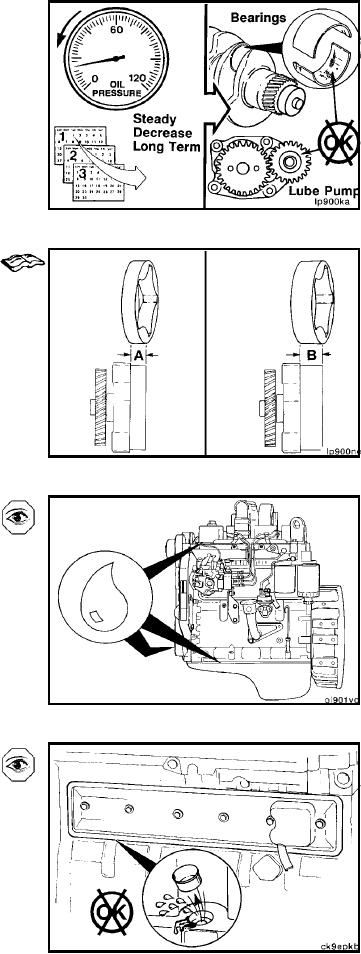
A steady decrease in oil pressure over a long period can
be an indication of worn bearings or excessive oil pump
wear.
Incorrect Lubricating Oil Pump
The capacity of the six-cylinder oil pump is greater than the
four-cylinder. If low or high pressure occurs after changing
the pump, verify that the correct pump was used. Refer to
Procedure 007-031.
A - Four Cylinder
12.947 mm [0.510 in]
B - Six Cylinder
17.947 mm [0.707 in]
NOTE: Earlier model B Series engines used lower capacity
pumps. Check to be sure the correct model pump is used.
Lubricating Oil Leaks
Various gaskets, seals, and plugs are used to contain the
lubricating oil. Most leaks can be identified during routine
inspection of the engine and vehicle.
A blown expansion plug can allow a relatively large quantity
of lubricating oil to escape, resulting in a sudden drop in the
lubricating oil pressure.
When checking for such a leak, be sure to check the
expansion plug behind the tappet cover as well as those
that can be obscured by chassis parts.
Lubricating oil blowing out the breather is a good sign of a
blown expansion plug. This is usually more obvious on a
four-cylinder engine.
L-1051