

TM 5-3805-294-23-1
0003
HYEX THEORY OF OPERATION - Continued
Engine Operation - Continued
18
17
19
16
20
23
21
22
HYEX01676
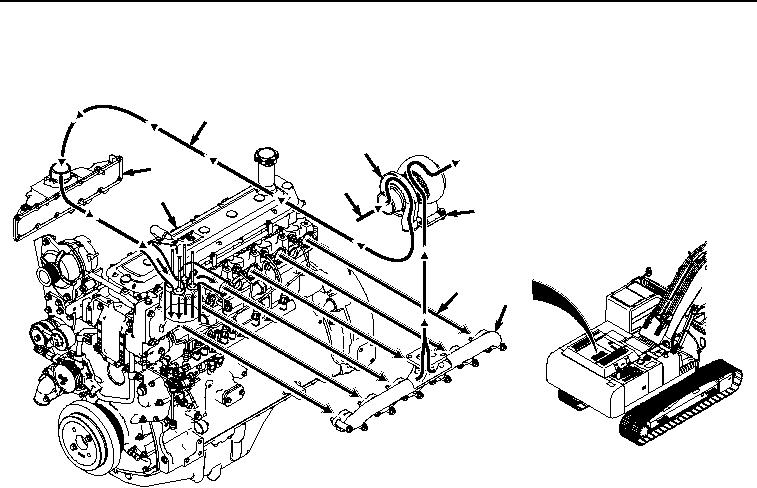
Figure 2. Engine Air Intake and Exhaust System.
Charge air enters the air intake manifold from the charge air cooler. A sensor on the intake manifold that measures
manifold air temperature is monitored by the engine control unit (ECU). This air is drawn into the engine cylinders
to be mixed with fuel and ignited.
Exhaust drives the turbocharger to deliver a larger quantity of air to meet the engine requirements than what could
be delivered under naturally aspirated (non-turbocharged) conditions. The exhaust of the hot gas speeds up the
turbine helping to pull in and compress more air to create more power.
During engine operation the ECU continuously monitors and compares signal inputs from the temperature and
pressure sensors on the engine. The ECU then calculates the amount of fuel needed to meet the required or
requested condition. If the ECU determines that any of the input signals are not what is expected for the current
operating conditions, it will try to calculate the amount of required fuel using available inputs. It may use default
values or values from tables within the ECU to help make proper decisions.
A charge air cooler is found just behind the A/C condenser in the cooling package stack. It cools the compressed
(therefore heated) air that comes from the turbocharger before it enters the engine.
Turbocharger
The turbocharger, which is basically an air pump that is driven by exhaust gases, allows the engine to produce added
power without increasing displacement. Turbochargers are specially matched for the power ratio requirements of
each specific application.
The turbine wheel (Figure 3, Item 24) is driven by the hot engine exhaust gases. These gases flowing through the
turbine housing (Figure 3, Item 25) act on the turbine wheel, causing the shaft (Figure 3, Item 26) to turn. The
compressor wheel (Figure 3, Item 27) brings in filtered air and discharges the compressed air to the charge air cooler.
The air is then pushed into the intake manifold where it is delivered to engine cylinders.