

TM 5-3805-294-23-1
0003
HYEX THEORY OF OPERATION - Continued
Engine Electronic Control System - Continued
The CPU is considered the brains of the ECU. It reads instructions from storage (memory) and interprets them. It
receives information from external components, like sensors, through the A/D. It sends outputs to control external
components, like injectors. It also performs mathematical computations and logical functions.
Memory is a component capable of retaining digital information. This information can be operation code, data files,
or fragments of data. Temporary memory (RAM) is used to hold data for short periods of time. This information is
lost when the key is turned to OFF position. Permanent memory (Flash) stores information for long periods of time.
This is where the program and calibration information is stored. The information in this type of memory is not lost
when power is completely removed or if the controller is removed from the engine harness.
The ECU has several internal power supplies for external components, commonly referred to as sensor supplies,
that deliver reference voltages to the engine sensors, throttles, and switches. Multiple power supplies are used,
because there are so many external components. This also keeps critical components from being affected by shorts
in other components.
Measuring Temperature
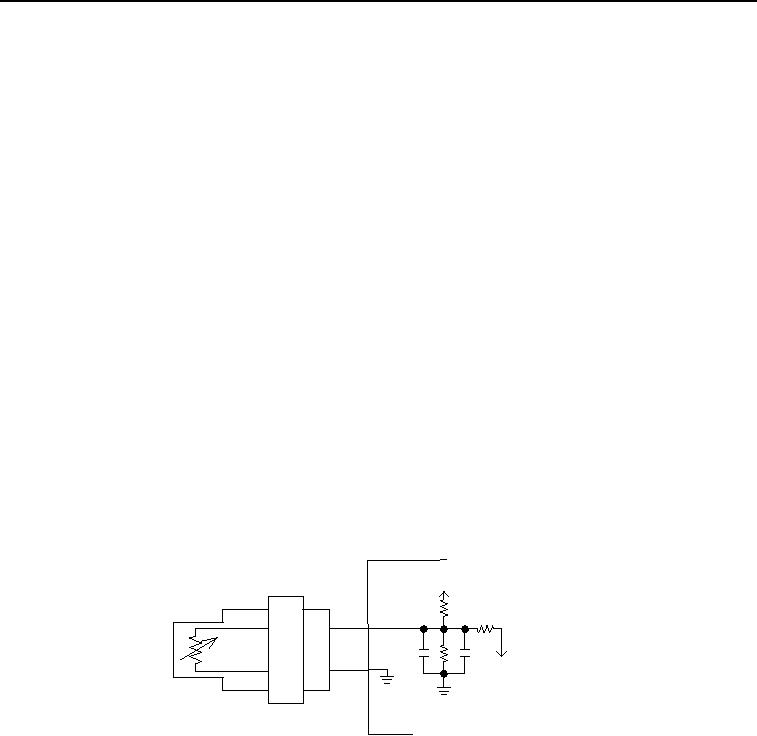
Temperature sensors (Figure 7, Item 55) are generally temperature-sensitive variable resistors. The resistance of
the sensor decreases as temperature increases (negative temperature coefficient). As the temperature changes it
causes the input signal (Figure 7, Item 56) to change. The ECU (Figure 7, Item 57) compares this reference voltage
(Figure 7, Item 58) with values programmed into its memory. If the reference value measured is near the expected
value, the ECU assumes everything is correct. If the value is above or below the expected value, or no ground (Figure
7, Item 59), the ECU will set the appropriate diagnostic trouble code (DTC). The ECU has the ability to derate the
engine power, engine speed, or to shut down the engine in an attempt to protect the engine and its components. If
certain temperatures exceed the threshold, the ECU will enable the engine protection.
57
55
58
56
59
HYEX01681
Figure 7. Typical Temperature Sensor Schematic.
The ECU temperature sensor is located within the ECU. This sensor is used to determine the internal temperature
of the ECU. If the temperature exceeds the temperature specification, the ECU will limit the speed of the engine in
an attempt to protect the ECU from permanent damage. This sensor cannot be repaired or replaced without replacing
the entire ECU.
The ECU monitors the engine coolant temperature for engine protection purposes. Depending on the severity of the
temperature increase, the ECU transmits a diagnostic code for either moderate or extreme levels. The engine is
derated correspondingly to each level of severity. If the ECU determines the coolant temperature is too low for the
current operating conditions, it will set a diagnostic trouble code. This normally indicates that a thermostat is stuck
open.